Painting with Light
...and remembering my dad, Donald Patience

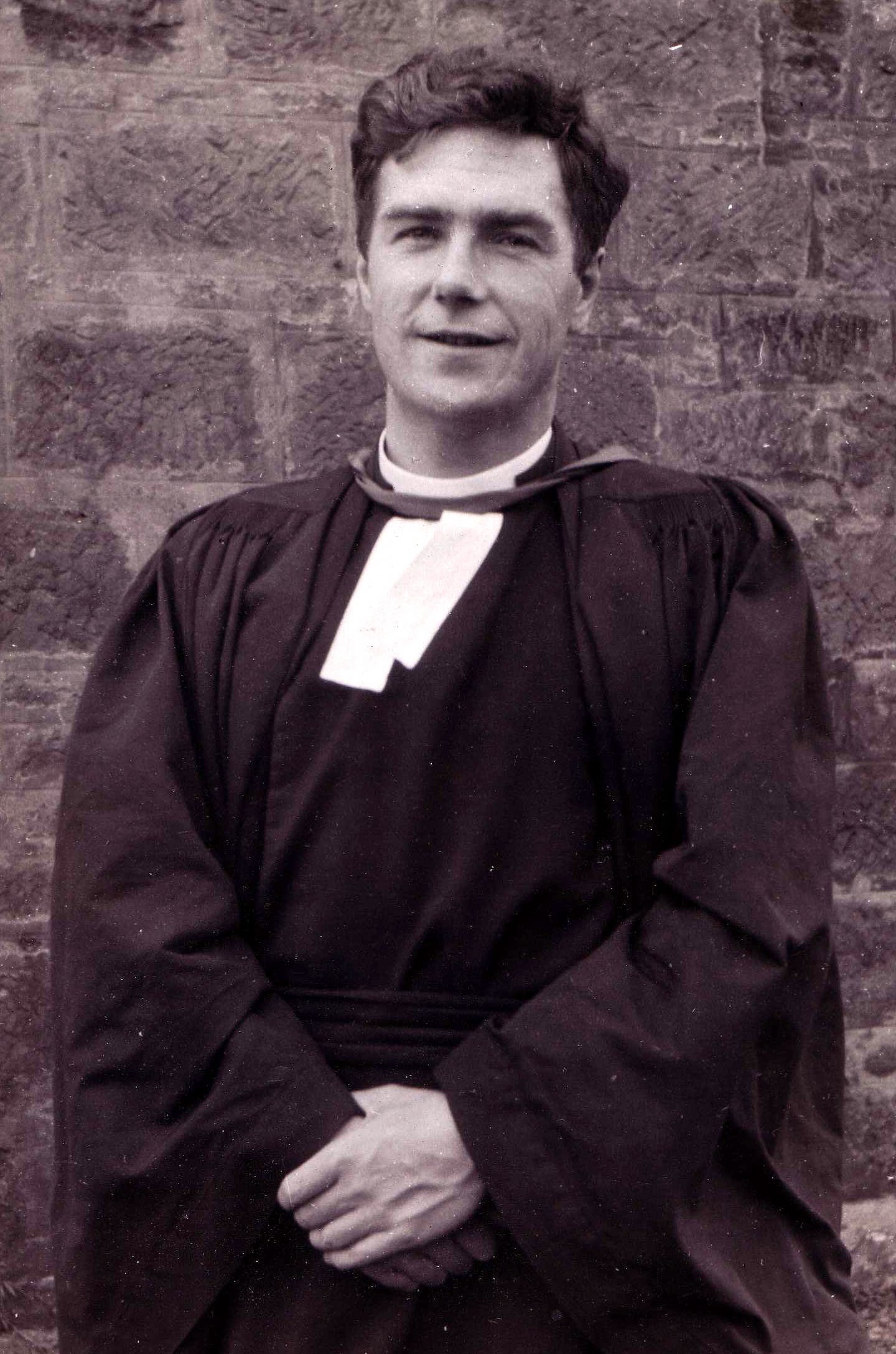
My dad, Donald Patience, was born on Thursday 28 June 1928 into a hardworking family of former fisherfolk from Avoch on the Black Isle, north of Inverness. Ask any passing Patience you might meet and their connections generally go back to Avoch (pronounced och as in the way a Scottish person says loch).
Dad’s family moved to Blair Atholl in Perthshire the early twentieth century in search of work on the railway. My grandfather Charles, and great grandfather Donald both worked on the railway in Blair Atholl at the time of dad’s birth.
When he was a baby, dad and his parents, Charles and Annie, moved to the village of Carrbridge in the Cairngorms, where my grandpa found work at the village’s railway station. It’s very close to where I live now and I think of them often, living in the Railway Cottage there.
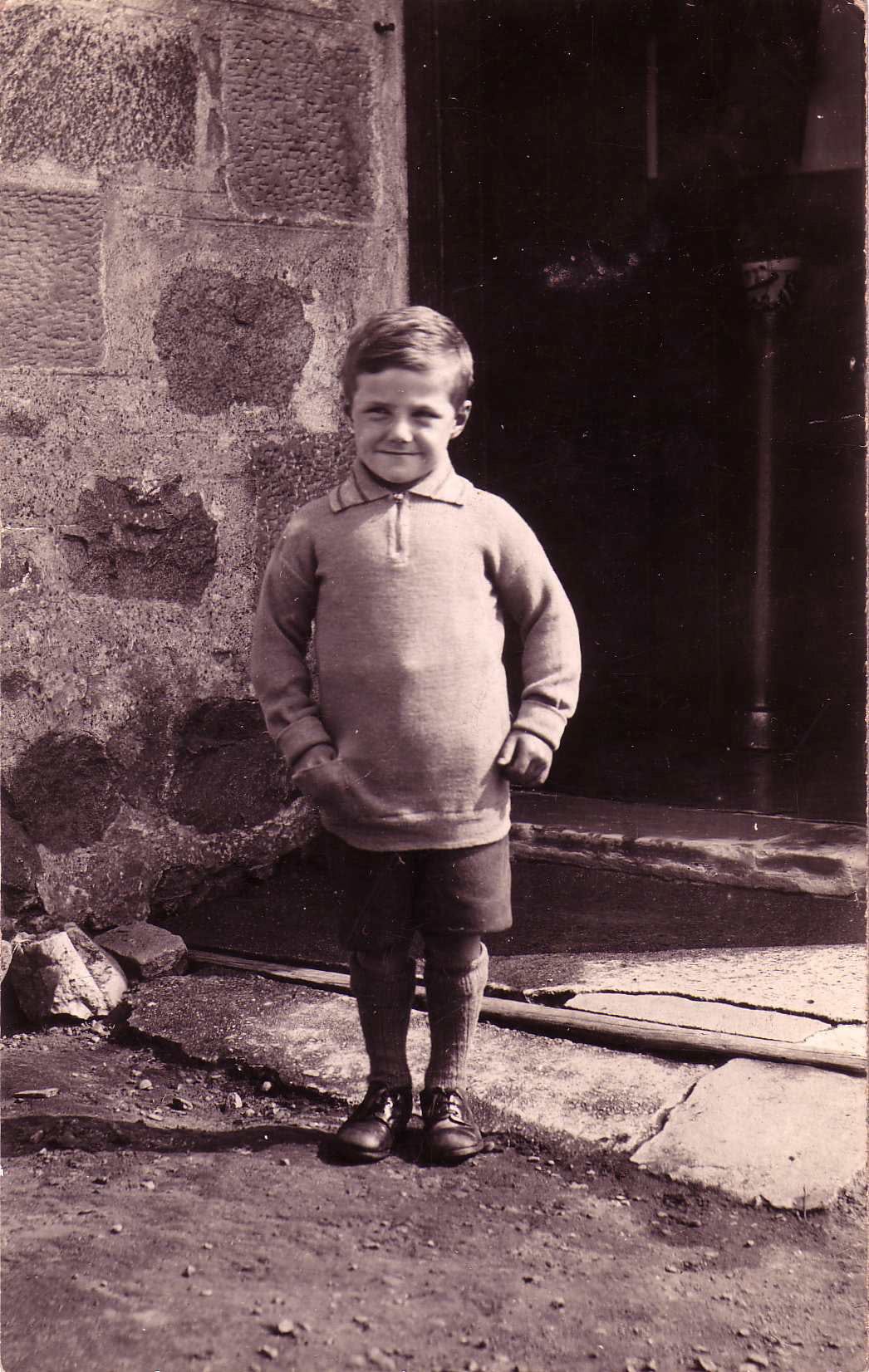
Dad was an only child. There had been an older brother, but he had died as a baby. I’ve searched for my imaginary uncle several times. There’s no sign of him in documents I inherited from dad in an old black metal box. I’ve also searched on Scotland’s People, the website which charts births, marriages, deaths - and more - for the people of Scotland. No trace. I have no memory of grannie Patience, who died when I was two. My mum used to say she was depressed a lot of the time. Losing a baby - who left no earthly footprint, not even a name or a birth certificate – must have knocked her in all ways.
Wee Donald was a smart lad. Dux at Duthil Primary School and then at Kingussie Public School. The local minister in Carrbridge took an interest in him and with his help, he applied for St Andrews University and was accepted. He received an endowment from the Carnegie Trust and spent six very happy years supported by it studying for two degrees, history and then theology, at St Andrews.

Dad died in 2004 at the age of 76 and yesterday, I woke up thinking about him.
Then I read Kenny Farqhuarson of The Jaggy Thistle’s story which he wrote in 2024 after discovering that his dad, who died when he was a young teenager, had been a typewriter salesman at one point. Like Kenny, I have a deep love of the typewriter, having heard my dad batter away on it at all hours of the day and night, writing sermons and the rest. Sometimes in red ink.
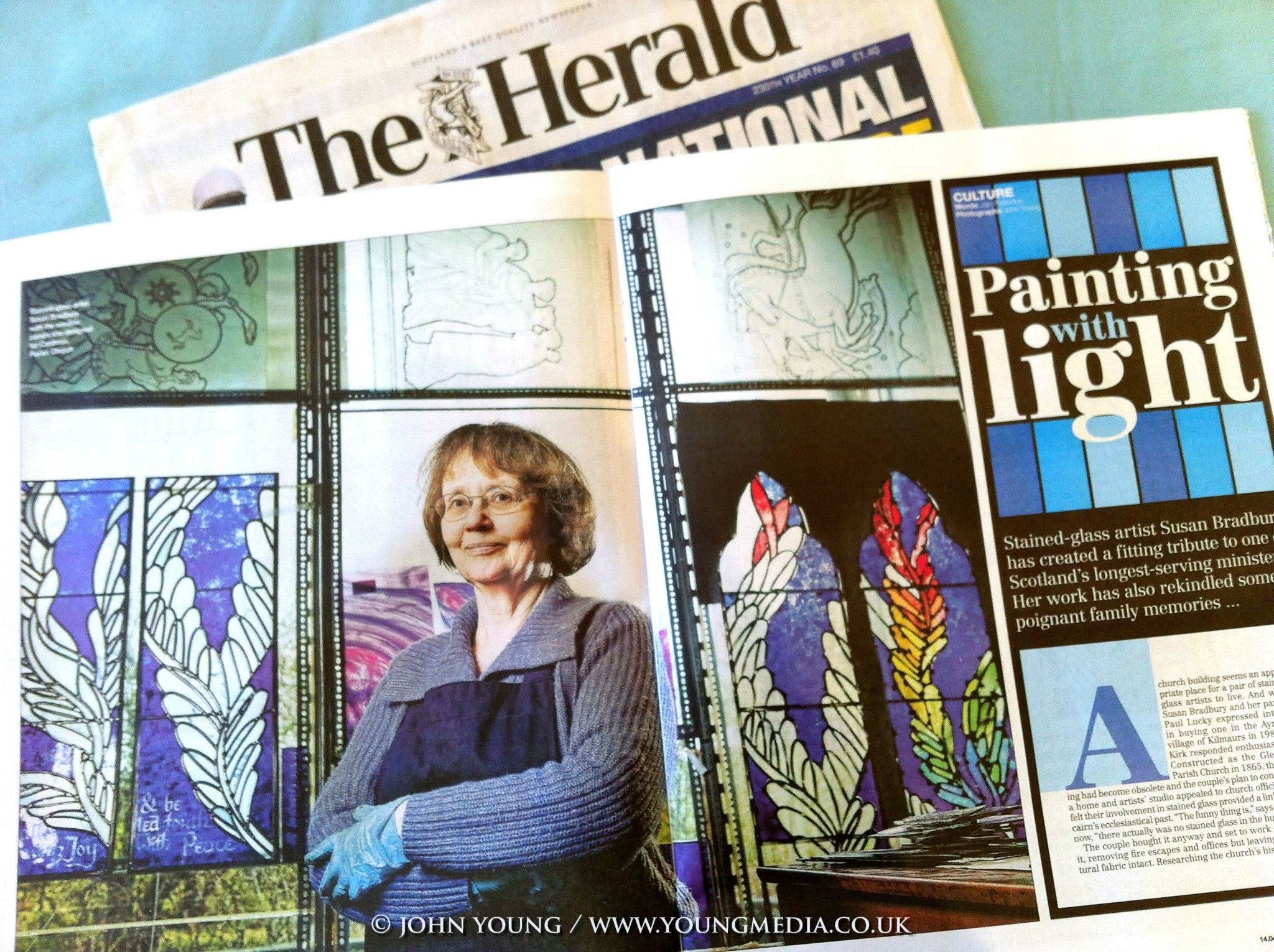
It reminded me that I had written a piece for The Herald newspaper’s Magazine about the power of stained glass – and my dad. I also wrote about stained glass artists Susan Bradbury and Paul Lucky. Susan designed and produced 10 stained-glass windows for Cardross Parish Church in Dumbarton, in memory of Andrew Scobie, minister there for 45 years until his death, aged 75, in October 2010. Rev Scobie was one of the kirk’s longest-serving ministers in a single parish.
My piece was published on 14 April 2012. The link to Painting with Light is here. I can’t for the life of me find the PDFs, apart from one page. The piece was illustrated by photpgrapher John Young.
Sadly Paul Lucky, one half of the the stained glass couple I mention in the piece, died in 2015. I wrote his obituary for The Herald. You can read it here.
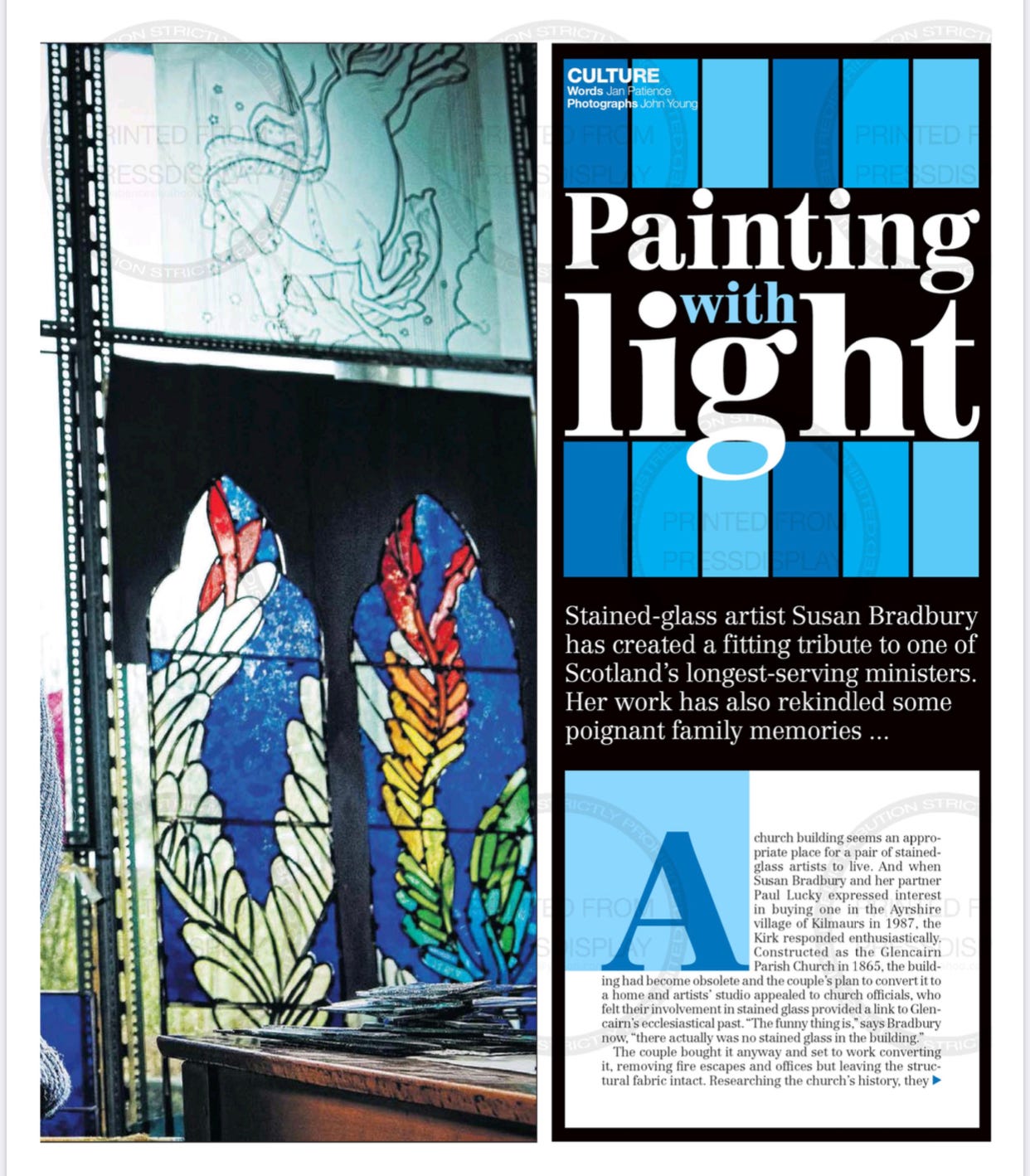
PAINTING WITH LIGHT
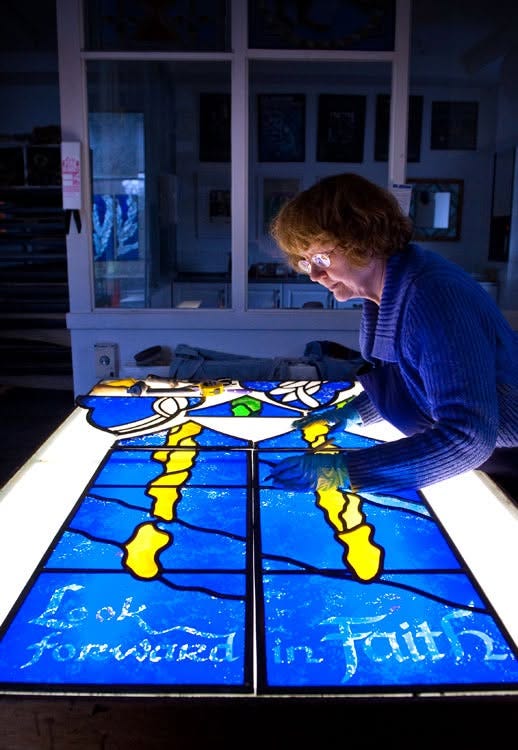
“Look Forward in Faith”, “Look Forward in Hope” and “His Purpose is Love”
A church building seems an appropriate place for a pair of stained-glass artists to live.
And when Susan Bradbury and her partner Paul Lucky expressed interest in buying one in the Ayrshire village of Kilmaurs in 1987, the Kirk responded enthusiastically. Constructed as the Glencairn Parish Church in 1865, the building had become obsolete and the couple’s plan to convert it to a home and artists’ studio appealed to church officials, who felt their involvement in stained glass provided a link to Glencairn’s ecclesiastical past. “The funny thing is,” says Bradbury now, “there actually was no stained glass in the building.”
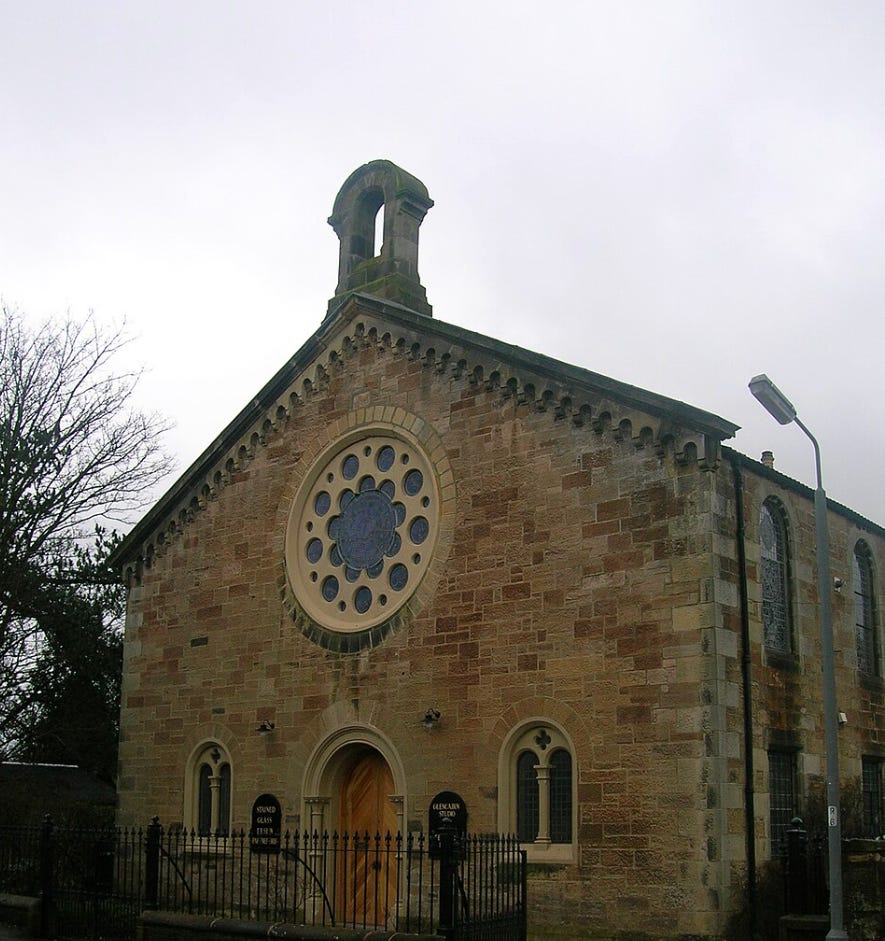

The couple bought it anyway and set to work converting it, removing fire escapes and offices but leaving the structural fabric intact. Researching the church’s history, they discovered that stained glass had featured in the original plans, but proved too costly to install.
“There were two large rose windows facing each other in the area which is now our living area and which was the part of the church where the congregation sat,” says Bradbury, “but like all the windows in the building there was frosted glass in them.”
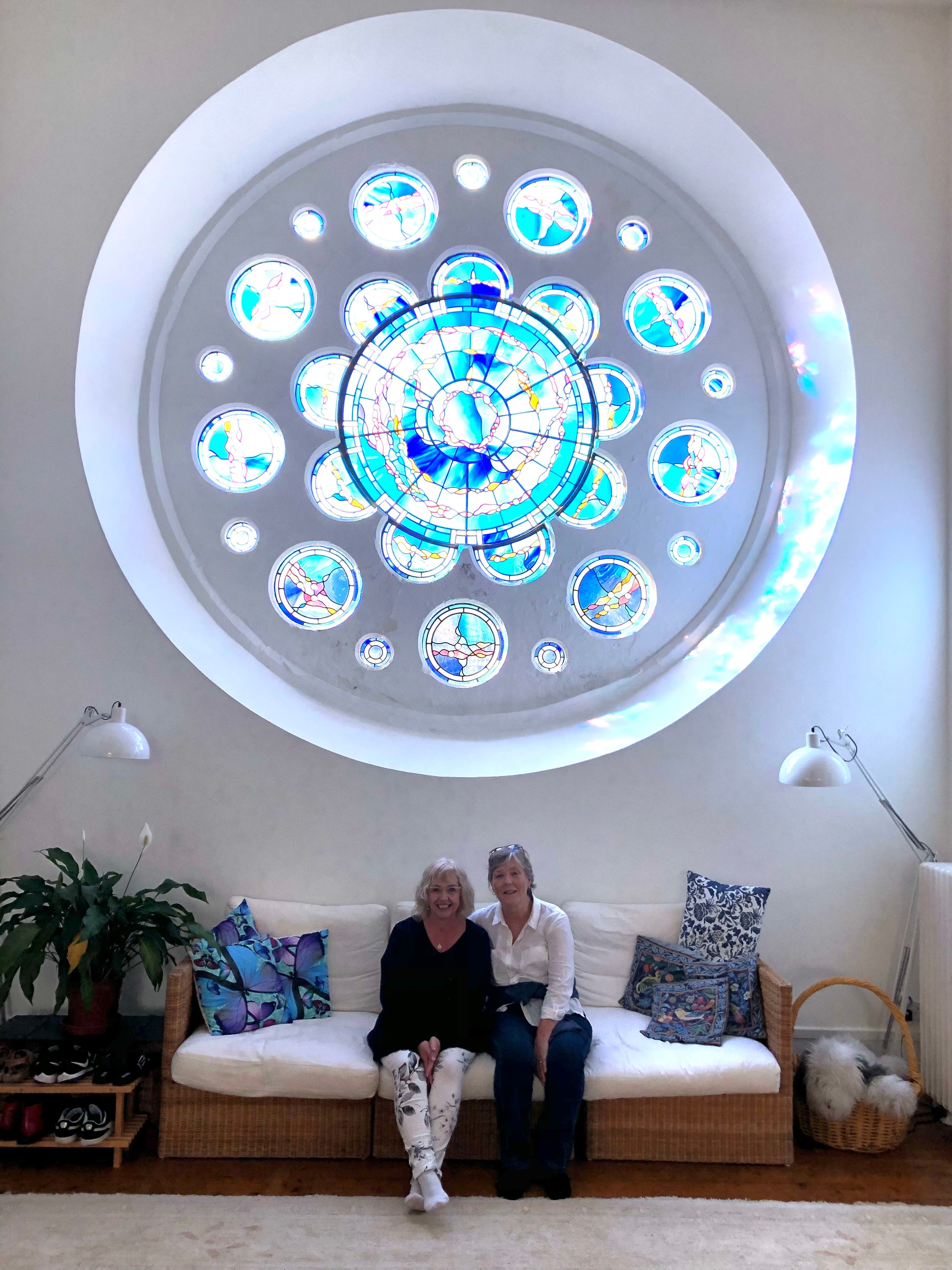
Today, the upper floor of the church – now the couple’s living area – is bookended by those two rose windows, one of which has a Bradbury/Lucky stained-glass design titled Cosmos.
To this “daughter of the manse”, visiting the couple’s home and studio feels like a homecoming of sorts. The last person to preach here was my late father, the Rev Donald Patience, who in 1963, aged 35, came to minister to the newly joined St Maurs-Glencairn Church. At first, he preached in the two churches of St Maurs and Glencairn. By 1967, however, it was decided it would make fiscal sense to convert the “younger” building, Glencairn Church, into a church hall and retain the older, more historic St Maurs Church, originally constructed in 1600.
There is a story which has passed into Patience family folklore, which has it that during the refurbishment of Glencairn into a church hall, and unbeknown to the men who were working away below, my father decided to have one last quiet moment in the pulpit before it was removed.
Unfortunately, nobody had told him that the flooring of the pulpit had been taken away. The next thing Dad knew, he had disappeared into the boiler room below with a resounding thud. The cry went up: “The meenister’s awa’!”
He escaped with a very bad back sprain and a new anecdote, which made its way into many a children’s address over the years to come.
Being in Bradbury’s studio brought memories flooding back, especially now that both my father and my mother, Flora – a redoubtable meenister’s’ wife if ever there was one – are sadly no longer with us.
During our childhood, my older brother, Charles, and I spent many hours in this building – at Sunday school, at functions, at all-night sponsored Bible read-ins, at the Youth Fellowship, playing badminton, hanging about waiting for my parents to stop talking. The minister was always the last to leave. Those badminton and Sunday school sessions took place in what is now the artists’ living area, and while we are sipping tea there and swapping stories about the building and its past life, Lucky draws my attention to the sanded floorboards, where the vague outline of a badminton court can just be detected.
As the Stained Glass Design Partnership, Bradbury and Lucky have lived and worked here for 25 years now, producing windows which have found their way into churches and public buildings across the UK. High-profile commissions have included work on restoring stained glass in St Giles’ Cathedral in Edinburgh, the Burns Memorial Window in Alloway Kirk, an expanse of glass larger than a tennis court for the Norwich Union Insurance Group in Norwich and a major commission by Boyd Tunnock, of confectionery firm Tunnocks, in memory of his parents for Uddingston Parish Church. Most recently, Bradbury has produced 10 stained-glass windows for Cardross Parish Church, in memory of Andrew Scobie, who was the minister there for 45 years until his death, aged 75, in October 2010. He was one of the kirk’s longest-serving ministers in a single parish.
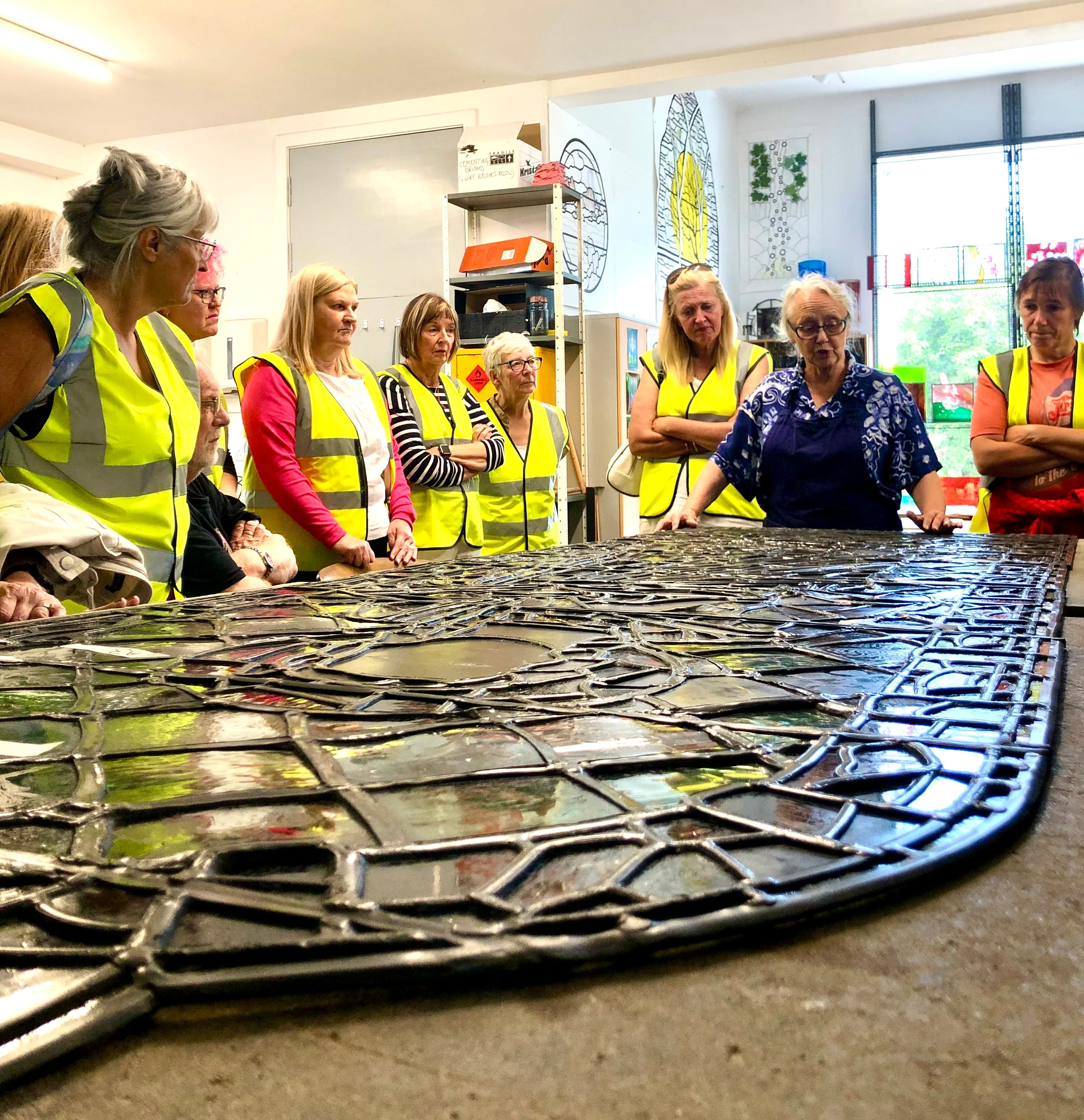
The stained glass was commissioned by Scobie’s family and funded by relatives and a host of donations. For Bradbury, it was rather a special commission. “When you make windows in memory of someone, you get close to the family and to the subject,” she says. “In this case, it was a little bit different as I knew Andrew personally, so that makes it even more special.
“I first met him in 1997 when he was a member of what was then called the Church of Scotland’s Art and Architecture Committee. Paul and I were commissioned to design and make an entire scheme of stained glass for Sherbrooke St Gilbert’s Church in Glasgow, after the original windows were destroyed by a fire. Andrew was very supportive.
“His wife, Jeannette, contacted me not long after he died to say the family wanted me to design a set of windows in memory of Andrew. She said he had always wanted to put stained glass in the back windows of the church and that he ‘wanted Susan Bradbury to do it’, which was a lovely thing to hear.”
The Cardross windows are, she explains, of unusual dimensions at a foot wide and a metre high. “They have been inspired by the words of two hymns, one written by Andrew himself, and one which he sang on his last Sunday in church.”
The new windows at the back of the church are inspired by the hymn the minister wrote, called Cardross. On these windows, the artist has etched the phrases, “Look Forward in Faith”, “Look Forward in Hope” and “His Purpose is Love” using specially layered handmade glass.
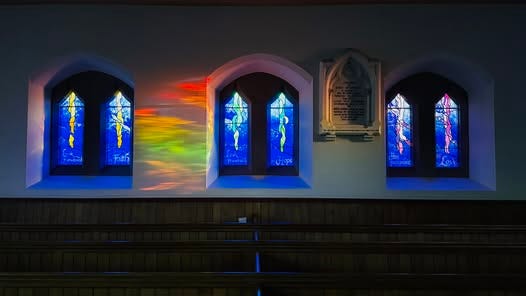
Faith is represented by a flow of golden light, Bradbury explains, while hope is marked by the traditional colour of green and love is symbolised by royal purple. “The purple colour escapes from its bounds as if to remind us that love permeates all,” she adds.
On either side of these pieces, one wall has a window which has the theme of peace, stylised by a white dove. On the other side, joy is a flutter of uplifted wings. The two related designs both bear the same words from the hymn which Jeannette Scobie says her husband “sang with gusto” on his last Sunday leading worship in Cardross: “You shall go out with joy and be led forth with peace.”
“After he died, I wanted to do something in my husband’s memory as minister of the church he loved,” explains Jeannette. “He wanted to make the church a beautiful place to worship. He loved colour and these windows are just beautiful.”
Although she had seen the work in progress, Jeannette Scobie didn’t see the newly installed windows until the beginning of this month, at a Palm Sunday dedication service led by the former Moderator of the General Assembly of the Church of Scotland, the Very Rev Dr John D Miller. The two hymns which inspired the new windows were sung by the congregation, and the church’s millennium peal of bells, lasting some 15 minutes, rang out.
It was, reports the Rev David P Munro, locum minister for Cardross Parish Church, “a joyful and memorable event”.
Amen to that. And to all the dedicated Kirk “meenisters” who, like my father and Andrew Scobie, have now walked into the light, with joy, and in peace.
Lovely read Jan.
Great pieces of writing Jan! Thanks!